
Springfield Warrant Records
Springfield warrant records are managed through the Hampden County court system and the Springfield Police Department. Springfield is the third largest city in Massachusetts, and its courts process a significant number of criminal cases each year that result in warrant records. You can search for active arrest warrants, bench warrants, and related case records using state court tools and local police resources. The Springfield District Court and Hampden Superior Court both handle cases that produce warrants for people in the city.
Springfield Overview
Courts Issuing Springfield Warrants
Springfield District Court at 50 State Street is the main court for criminal cases in the city. Call (413) 748-8600 for general information. This court handles misdemeanors, lower-level felonies, and violations. Judges issue both arrest warrants and bench warrants from this court. Hampden Superior Court sits at the same address and deals with more serious felony cases. Reach them at (413) 748-7760.
Under M.G.L. Chapter 276, warrants in Springfield must meet the same legal standards as anywhere else in the state. A judge reviews the evidence and decides if probable cause exists before signing a warrant. Bench warrants require no application. The judge issues one on the spot when someone does not show up. These warrants go into the statewide system, so officers across Massachusetts can see them and act on them.
| District Court | 50 State Street, Springfield, MA 01103 (413) 748-8600 |
|---|---|
| Superior Court | 50 State Street, Springfield, MA 01103 (413) 748-7760 |
| Sheriff | Hampden County Sheriff's Office (413) 858-0100 |
The Hampden County Sheriff's Office at (413) 858-0100 assists with warrant service in Springfield. They work closely with local police to track down people with open warrants in the county.
Search Springfield Warrant Records
Springfield does not run a public online warrant search tool. There is no city database where you can type a name and pull up active warrants. But several other options exist for finding warrant records connected to Springfield cases.
The MassCourts e-Services portal covers Springfield District Court and Hampden Superior Court. You can search by name or case number for free. The results show docket entries, case status, and hearing dates. When a bench warrant has been issued, it typically shows in the docket notes. This is the most direct free way to check for warrant-related information on Springfield cases.
The Springfield Police Department website provides general details about how to access records. Their Records Division at (413) 787-6310 is open Monday through Friday, 8:00 AM to 4:00 PM. You can also send records requests to records@springfieldpd.org. The department uses the NextRequest portal for public records requests, which lets you submit and track requests online.
The Springfield Police Department website shown below gives an overview of the department and its services, including how to reach the Records Division.
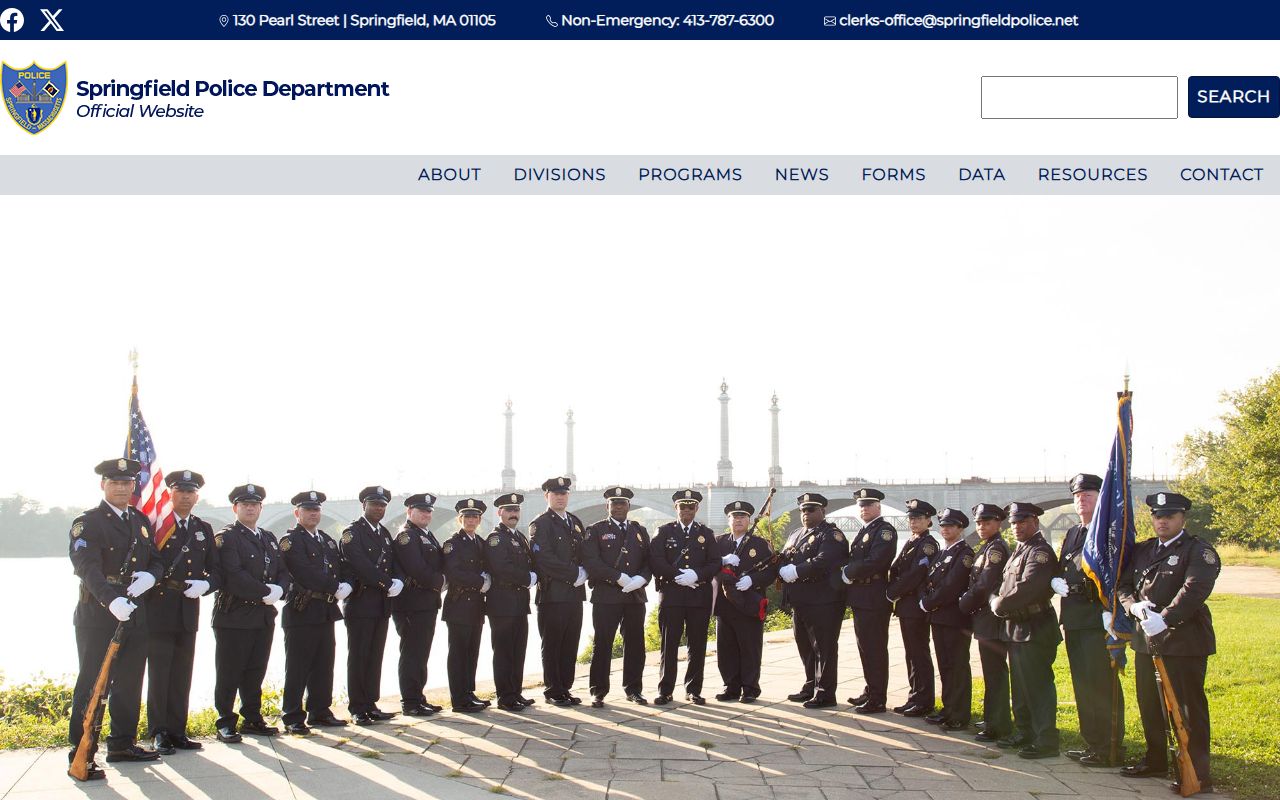
Contact information for the Records Division and other units is listed on the site along with links to additional resources.
Springfield also uses the NextRequest portal for processing public records requests, shown here.
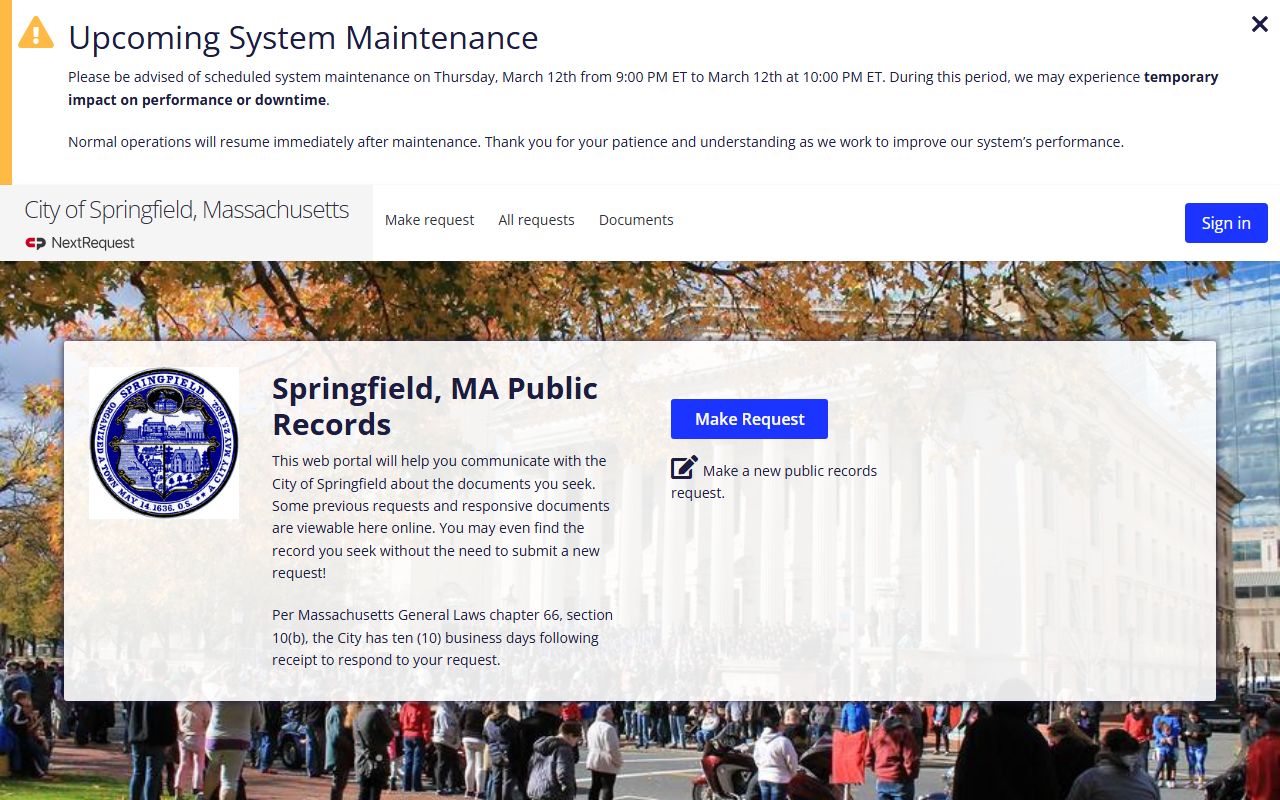
Through this portal you can submit, track, and manage public records requests with the City of Springfield.
Note: Copy fees are $0.05 per page with the first two hours of staff research time provided at no charge.
State Tools for Springfield Warrant Searches
The iCORI system run by the Department of Criminal Justice Information Services lets you check criminal records for a small fee. Results may show arrest history and court actions tied to Springfield cases. This can help identify whether someone has an open warrant or a past case in the city.
Under the Massachusetts Public Records Law, you have the right to request certain records from government agencies. But law enforcement records have some limits, especially for active cases. If a warrant is still open and part of an ongoing investigation, the police may not release details through a public records request. Once a case is resolved, those records are more likely to be available.
The court docket search guide from Mass.gov explains what you can find through online court records and what requires a trip to the clerk's office in Springfield. The Trial Court Law Libraries offer research help if you need to understand the legal details behind a Springfield warrant.
How Springfield Warrants Work
The warrant process in Springfield follows state law. Police investigate a crime and bring their findings to a judge or clerk-magistrate. If there is enough evidence, the court issues a warrant. Springfield Police then serve the warrant, which can happen at any time of day. Officers do not need to wait for a specific hour to make an arrest on an active warrant.
Bench warrants in Springfield come from the District Court most often. The judge issues them when a defendant fails to appear for a hearing, trial, or sentencing. The warrant stays in the system until the person shows up or gets arrested. If you have a bench warrant in Springfield, you can work with a lawyer to set up a voluntary surrender. Courts in Springfield sometimes look more favorably on people who come in on their own rather than those who get picked up on a traffic stop or at a routine check.
Under M.G.L. c. 276, a person arrested on a warrant must see a judge as soon as possible. In Springfield, that usually means the next court session. If the arrest happens on a Friday night, the person may have to wait until Monday. The court will then decide on bail or other conditions for release.
Hampden County Warrant Records
Springfield is the county seat of Hampden County. All warrant records for the city flow through the Hampden County court system. The county also includes Chicopee, Holyoke, Westfield, and many smaller towns. For details on county-wide resources, the sheriff's office, and other search options, check the county page.
Nearby Cities
Springfield sits in western Massachusetts near other cities that handle their own warrant records through separate courts and police departments.