
Search Massachusetts Warrant Records
Massachusetts warrant records can be found through several state and local sources. The Trial Court system lets you look up case data across all 14 counties, and each county sheriff keeps its own files on active and past warrants. You can search by name or case number to find arrest warrants, bench warrants, and other court orders. Some tools are free to use online while others need an in-person visit or a formal request. This page walks you through the best ways to search for warrant records in Massachusetts, from the MassCourts portal to local clerk offices and sheriff departments statewide.
Massachusetts Warrant Records Overview
How to Search Massachusetts Warrant Records
There are a few ways to search for warrant records in Massachusetts. The most common path starts with the Massachusetts Trial Court Electronic Case Access system. This free tool is open to the public around the clock. You can look up case data from District Courts, Superior Courts, and Boston Municipal Court. Search by name, case number, or case type to pull up docket entries, court dates, and case status. It will not show full warrant details, but it can tell you if a case has warrant notes tied to it.
The system does have limits. Criminal case name searches are restricted in some courts. You will not find a full list of active warrants here. For that, you need the Warrant Management System, but it is only open to law enforcement and court staff. The public cannot log in to it. Still, MassCourts is the best starting point for free online warrant record searches in Massachusetts.
You can visit the Court Docket Search Guide on mass.gov for step-by-step help on how to use the search tools. The page links to each court type and walks you through the steps to find case records.
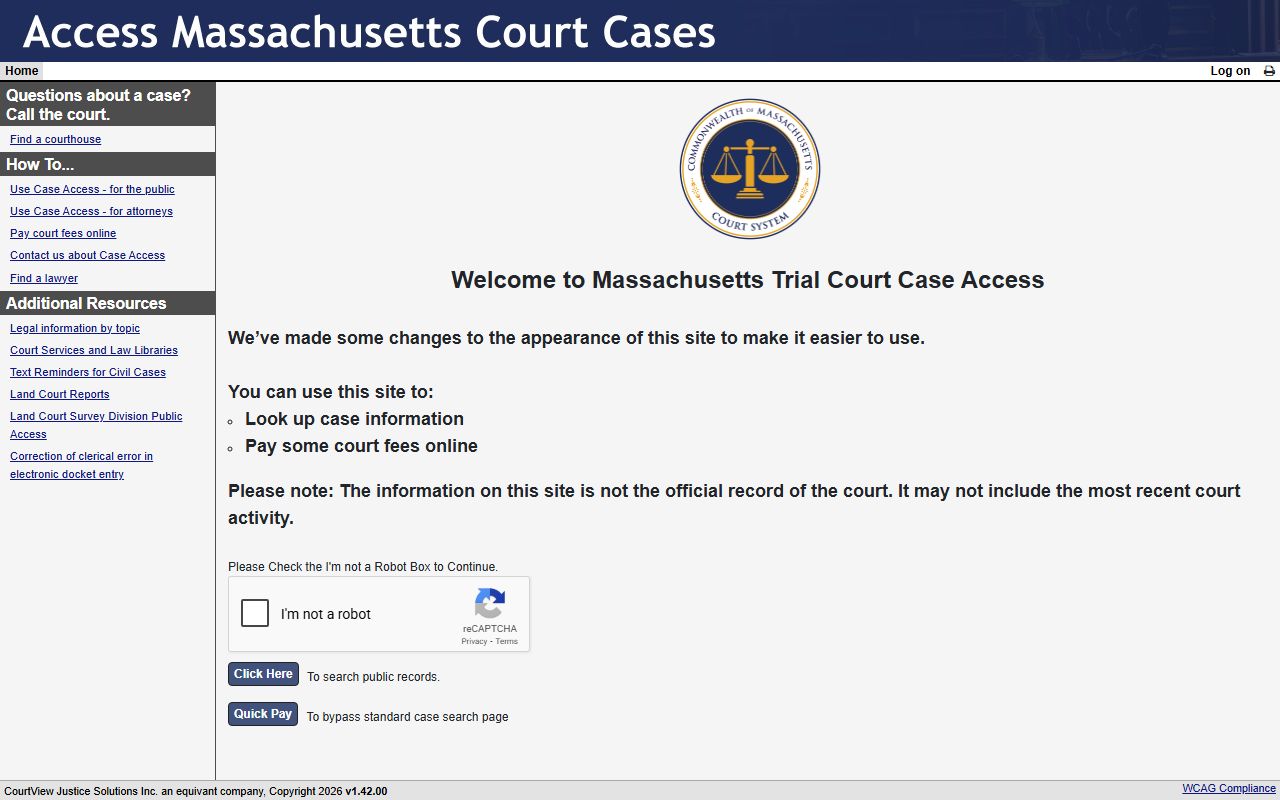
To search on MassCourts, go to the site and check the captcha box. Click the link to search public records. Pick the court type and location. Then type in the name or case number. The results show party names, docket entries, and dates. You can view each entry for more info.
Massachusetts CORI and Warrant Searches
The iCORI system is another way to search for warrant records in Massachusetts. CORI stands for Criminal Offender Record Information. The Department of Criminal Justice Information Services runs this program. It costs $25 per search and takes up to 10 business days to get results. You need a valid Massachusetts ID to sign up. The search is name-based, not fingerprint-based, so results may not be exact.
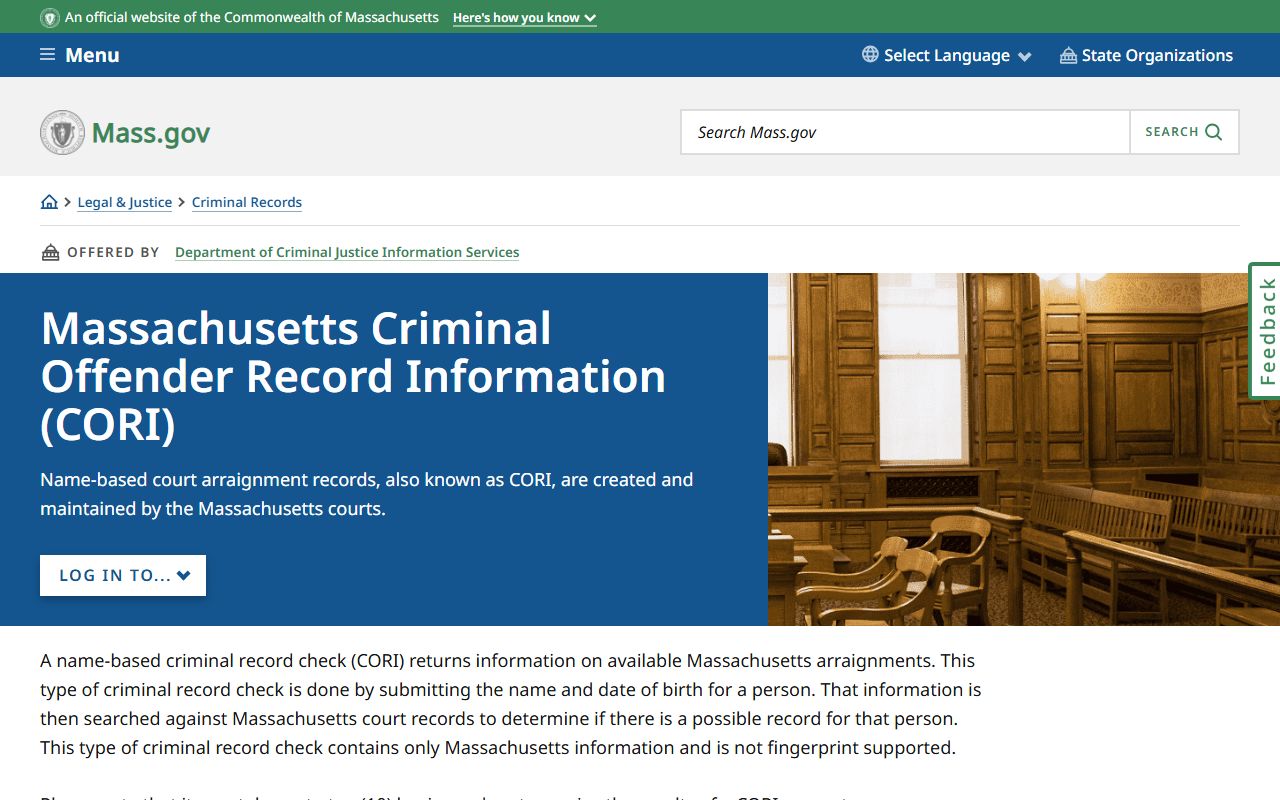
To use iCORI, register with your full name, date of birth, Social Security number, and address. You also need a valid email. Once set up, you can run a search on yourself or on another person. The results show court case data from Massachusetts courts, which may include warrant info. If you cannot pay the $25 fee, you can apply for a waiver if you meet income guidelines. Contact DCJIS at (617) 660-4640 or email icori.info@mass.gov for help with that.
Keep in mind that iCORI only pulls from Massachusetts state courts. It will not show federal warrants or cases from other states.
Types of Warrant Records in Massachusetts
Massachusetts courts issue several types of warrants. Each one serves a different purpose in the legal system and gets tracked in the state's Warrant Management System. Knowing the type helps you understand what to search for and where to look.
Arrest warrants are issued when there is probable cause that a person has done something against the law. A judge, clerk, or justice of the peace can issue one. The warrant allows police to take the named person into custody. An affidavit must be filed to show probable cause before the court signs off. These warrant records are public once the warrant is returned to the court, per M.G.L. Chapter 276, Section 2B.
Bench warrants are one of the most common types in Massachusetts. A judge issues them when a person fails to show up for court or breaks a court order. Under state rules, the court must notify the person within 30 days. The notice tells them the charge and how to clear the warrant. Bench warrant records show the person's name, the charge, the court that issued it, and the date.
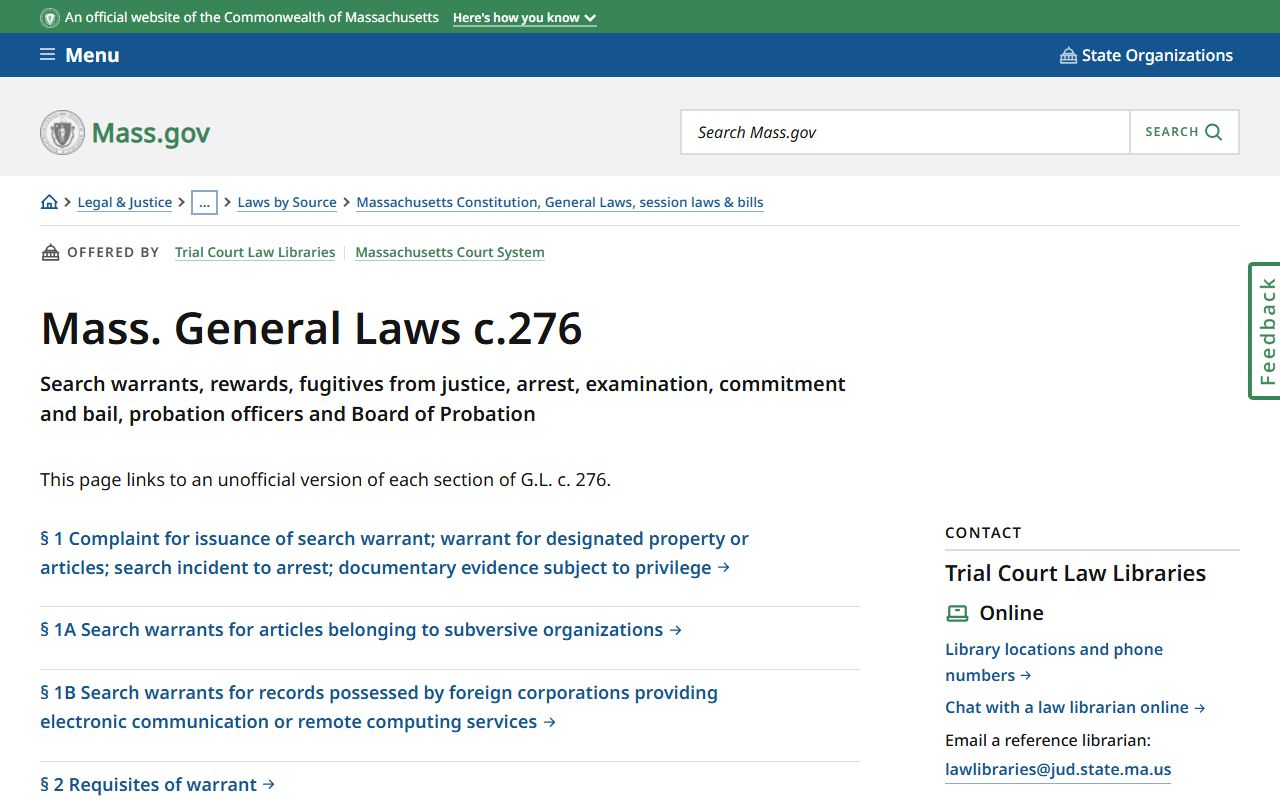
Search warrants let law enforcement look through a specific place or property. They must describe the location and the items they want to find. Under M.G.L. Chapter 276, Sections 1 through 2D, the court sets strict rules on how these warrants are issued and carried out. Since December 2020, Section 2D limits no-knock warrants. Police must knock and announce their presence in most cases, and any evidence taken in violation of this law cannot be used in court.
Other types include capias warrants for civil matters, witness warrants to compel testimony, and probation warrants for people who break the terms of their probation. The Office of the Commissioner of Probation at (617) 727-5300 handles probation warrant records.
Massachusetts Warrant Records and Public Access
Warrant records are generally public in Massachusetts. The state's Public Records Law under M.G.L. Chapter 66, Section 10 gives people the right to access government records. This includes most warrant records held by courts, sheriff offices, and police departments. You do not have to give a reason for your request. You do not have to be the person named on the warrant.
Some limits do apply. Warrants may be sealed by a court order if releasing the info would hurt an ongoing case or put someone at risk. Massachusetts Rules of Criminal Procedure Rule 6 covers the process for sealing and unsealing warrant records. Juvenile warrants are never made public. And the Warrant Management System, while it tracks every warrant in the state, is off-limits to the public. Only law enforcement and authorized court staff can use it.
One fact that sets Massachusetts apart: warrants do not expire here. Once a court issues a warrant, it stays active until police serve it or the court recalls it. That means old warrant records may still be active, even years later.
Note: Under Massachusetts law, warrants do not expire. An active warrant can be enforced at any time until the court recalls it or law enforcement serves it.
State Agencies for Massachusetts Warrant Records
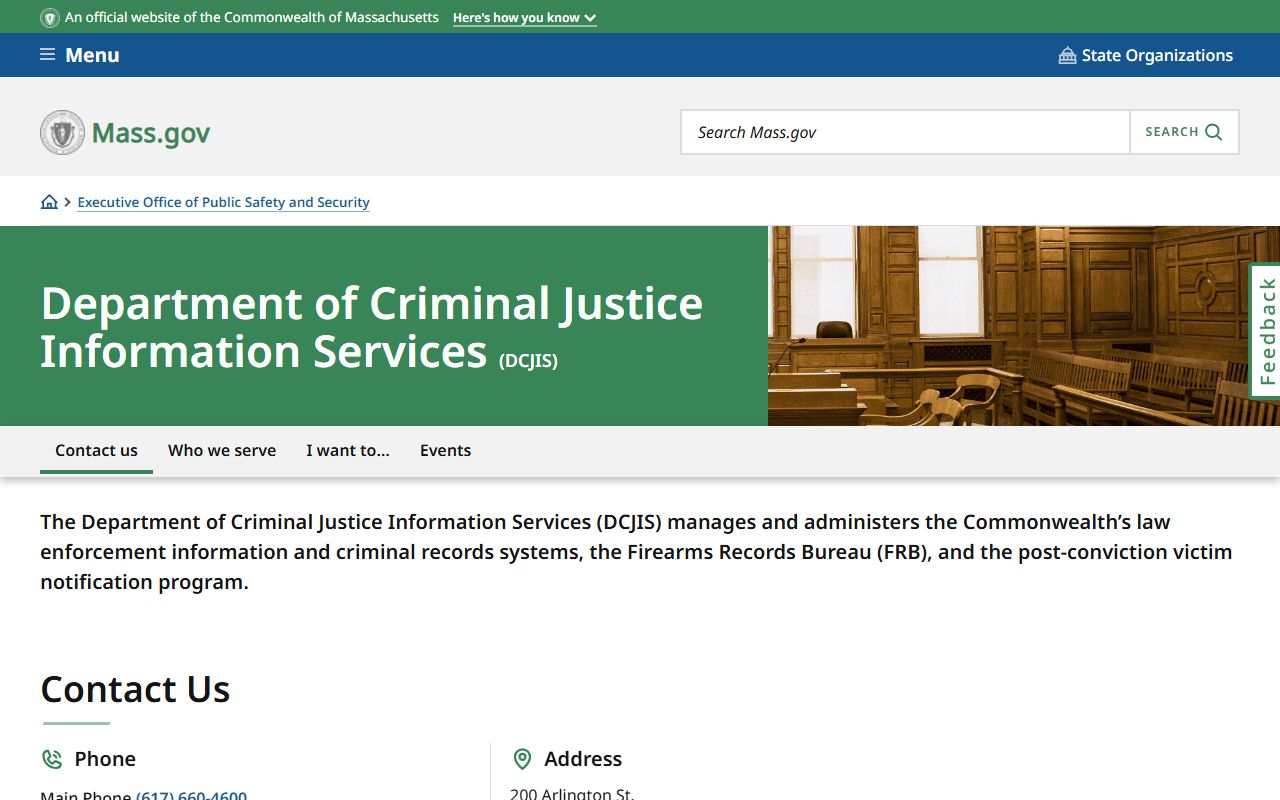
Several state agencies play a role in warrant records in Massachusetts. The Executive Office of Public Safety and Security oversees the Warrant Management System. You can reach them at (617) 727-7775 at 1 Ashburton Place, Suite 2133, Boston, MA 02108. They do not handle public lookups directly, but they manage the system that tracks warrants across the state.
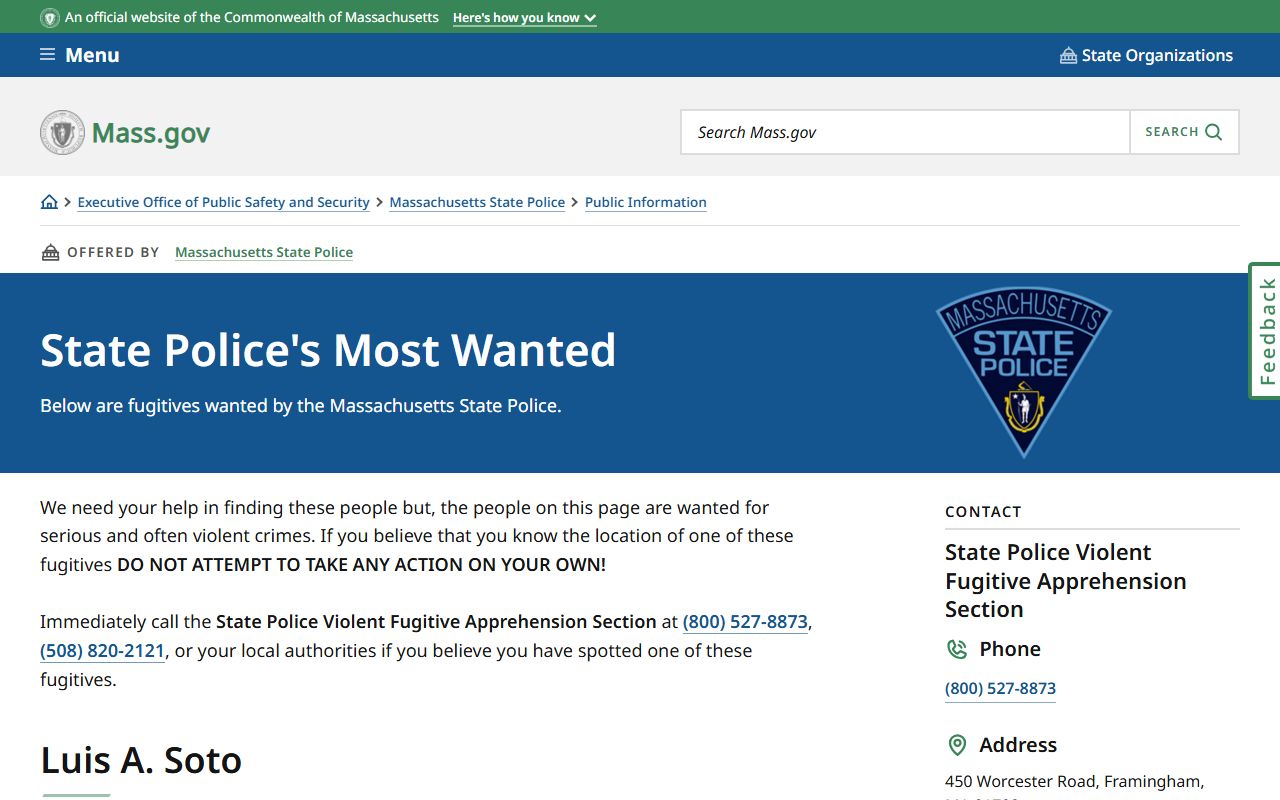
The Department of Criminal Justice Information Services at 200 Arlington Street, Suite 2200, Chelsea, MA 02150 runs the CORI system. Call (617) 660-4600 for general questions. The Massachusetts State Police maintain a most wanted list that shows people with active warrants. Their headquarters is at 470 Worcester Road in Framingham. You can call (508) 820-2300 at any hour. They can also check warrant status if you call and ask.
For federal warrant records, the U.S. District Court for the District of Massachusetts is at the John Joseph Moakley Courthouse, 1 Courthouse Way, Boston, MA 02210. Call (617) 748-9152 for the clerk's office. You can also search federal cases on the PACER system at pacer.gov, though that requires an account and has per-page fees.
Searching Warrant Records in Person
Every courthouse in Massachusetts has public access to case records. You can walk in and ask the clerk to search for warrant records by name or case number. Bring a valid photo ID. The clerk can pull up case data and print copies for you. Most courthouses are open Monday through Friday from 8:30 AM to 4:30 PM.
You can also go to any county sheriff's office. Each one handles warrant inquiries by phone, in person, or by mail. The sheriff's staff can check the Warrant Management System and tell you if a warrant is active. They can share the warrant type, the date it was issued, the reason, and which court signed it. For example, the Middlesex County Sheriff's Warrant Apprehension Unit at (617) 682-4890 handles these checks for the largest county in the state.
Under the Public Records Law, the first two hours of any search are free. After that, agencies can charge up to $25 per hour. Paper copies cost $0.05 per page. Electronic records are free when they exist in digital form. These fees are the same across all counties and cities in Massachusetts.
Note: If you have an active warrant and visit a police station or courthouse in person, you may be arrested. Consider calling or using online tools first, or talk to a lawyer before going in.
Resolving Active Warrants in Massachusetts
If you find out you have an active warrant in Massachusetts, there are steps you can take to resolve it. The best first move is to contact a lawyer. Many legal aid groups offer free or low-cost help.
For bench warrants, you usually need to go to the court that issued it. The court will schedule a new hearing date. You may need to pay fines or deal with the original issue that caused the warrant. The Trial Court Law Libraries can help you find the right forms and understand the process. For arrest warrants, the process depends on the charge. A lawyer can sometimes arrange a voluntary surrender, which looks better to the judge than getting picked up by police.
The Massachusetts Bar Association runs a lawyer referral line at (617) 654-0400. The first meeting costs $25 for 30 minutes. They also run a free Dial-A-Lawyer program on the first Wednesday of each month at (617) 338-0610.
Browse Massachusetts Warrant Records by County
Each county in Massachusetts has a sheriff's office and court system that keeps warrant records. Pick a county below to find local contact info, court locations, and resources for searching warrant records in that area.
Warrant Records in Major Massachusetts Cities
City police departments handle warrant-related reports and can direct you to the right court or sheriff's office for records. Pick a city below to find local warrant record resources.